Roof Restoration vs. Replacement: When to Recover Instead of Tear Off
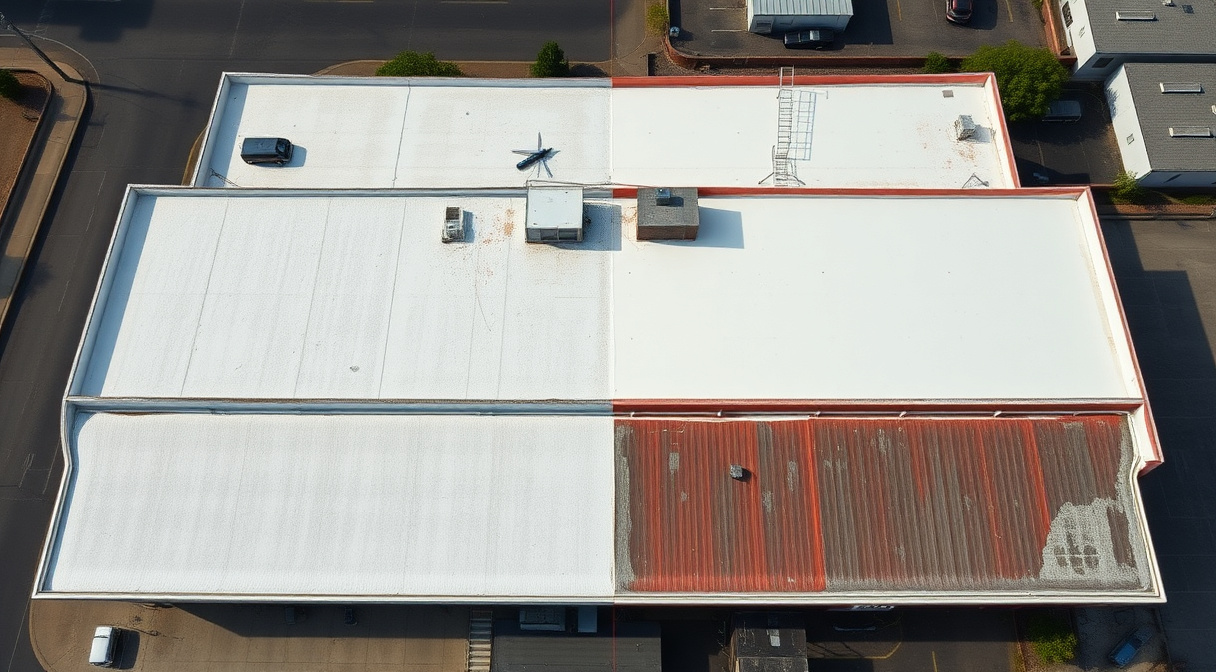
When a commercial roof starts leaking or reaches the end of its coating's life, the default advice is often 'you need a new roof.' Sometimes that's true — but frequently it isn't. Roof restoration with spray foam and coatings lets you recover an aging roof instead of tearing it off, saving a large share of the cost, most of the downtime, and tons of landfill waste. Here's how to know which path is right for your building.
What restoration actually means
Restoration (or 'recover') keeps your existing roof in place as part of the assembly and applies a new seamless, insulated, warranted surface over it. Wet or failed areas are cut out and repaired first, the surface is cleaned and prepped, and spray foam and a reflective coating are applied over the top — building slope where needed. The result is essentially a new roof, built on the one you already own, without the demolition and disposal of a tear-off.
The decision: can your roof be restored?
It comes down to two questions: is the roof structurally sound, and can it be made dry? Those determine whether restoration is viable.
- Structurally sound deck with a coating or membrane that's worn but intact → an excellent restoration candidate.
- Isolated areas of wet insulation → cut out and replace those areas, then restore the rest.
- Insulation saturated throughout the roof → the wet insulation must come out; if it's widespread, replacement may be more practical.
- Structurally failing deck → replacement is likely necessary for safety.
A proper assessment — including a moisture survey where warranted — answers these questions definitively. The mistake to avoid is spraying foam over trapped wet insulation, which seals the problem in. A good contractor checks first and is honest about what they find.
What you save by restoring
When restoration is viable, the savings are significant across several dimensions:
- Cost: restoration commonly runs a fraction of a full tear-off and replacement.
- Downtime: the building stays sealed and operations continue with minimal disruption.
- Waste: tons of old roofing stay out of the landfill.
- Performance: the restored roof adds R-value and a reflective cool-roof surface — often better than the original.
- Future cost: the restored roof is renewable, so recoats extend its life without another major expense.
When replacement really is the answer
Restoration isn't always right. If the roof deck is structurally compromised, if the insulation is saturated throughout, or if there are already too many roof layers, replacement is the responsible choice. A trustworthy contractor will tell you that plainly rather than selling you a restoration that won't hold up. The goal isn't to restore every roof — it's to make the right call for your building and your budget.
Get an honest assessment
The only way to know whether to restore or replace is a real assessment by someone who does both and has no incentive to push the more expensive option. We inspect the roof, survey for moisture, and give you a straight recommendation — restore when it's viable, replace when it's necessary, and a clear, transparent quote either way. Call 844-967-5247 for a free assessment.
Frequently asked questions
Savings vary, but restoration commonly costs a fraction of a full tear-off and replacement because you avoid demolition, disposal, and much of the new material — while also avoiding the downtime of an exposed building. On top of that, the restored roof is renewable, so future recoats extend its life without another major expense.
It depends on whether the deck is structurally sound and the roof can be made dry. Isolated wet insulation is cut out and repaired before restoring; a roof saturated throughout or structurally failing may need replacement. A proper assessment, including a moisture survey where warranted, gives you the answer.
Ready for a free roof assessment?
Tell us about your building and we'll build a clear scope and transparent quote.