Spray Foam Roofing: 2026 Cost, R-Value & Restoration Guide
If you own or manage a commercial building, the roof is one of your largest capital assets and one of your biggest sources of risk. When it starts to fail, you're faced with confusing options and even more confusing pricing — most roofers won't even publish a number. This guide fixes that. We'll walk through what a spray polyurethane foam (SPF) roof actually costs per square foot, how it compares head-to-head with TPO, EPDM, built-up, and metal, what its R-value does for your energy bill, and — critically — when it makes sense to restore your existing roof instead of tearing it off.
Whether you're chasing a chronic leak, staring at a replacement quote, or planning a capital roof project, by the end of this you'll understand what a good SPF roof should cost, what you're actually buying, and how to get the lowest lifetime cost.
What is a spray foam roof?
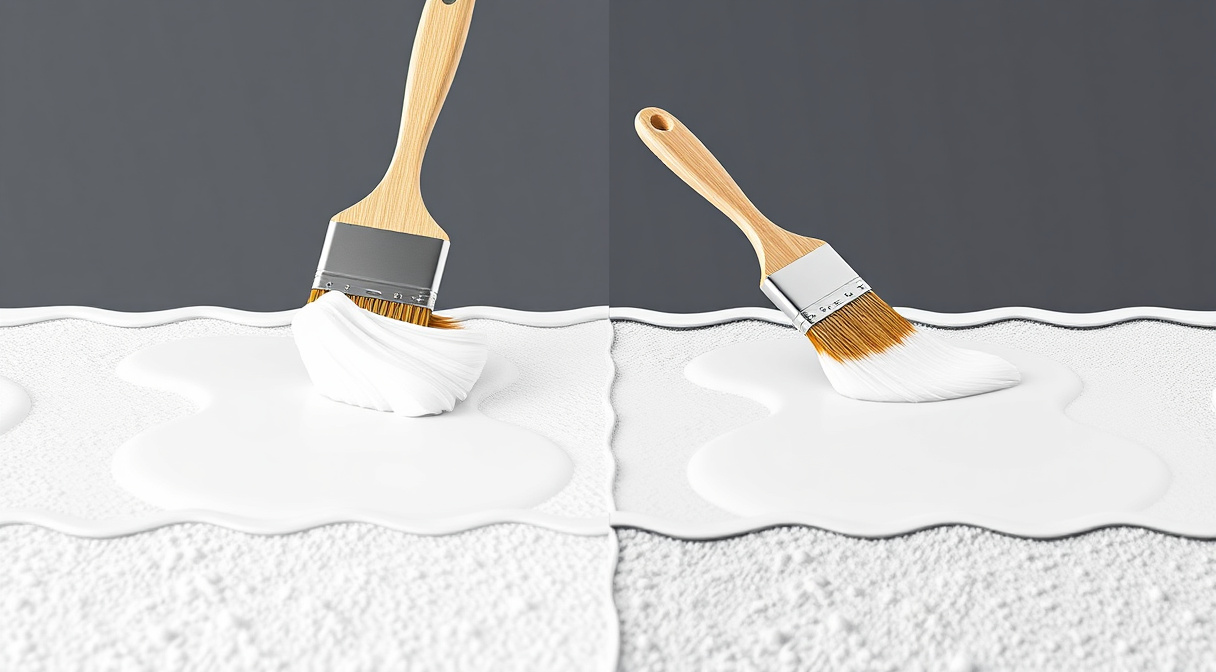
A spray polyurethane foam roof is applied as a liquid — two components combined at the spray gun — that expands in seconds into a rigid, closed-cell foam and cures into one continuous, monolithic surface. Unlike membrane or built-up roofs assembled from panels, sheets, and seams, an SPF roof has no seams to split, no fasteners to back out, and no separate flashings to fail. It's a single sprayed layer that wraps every penetration, curb, and edge, and it's protected by a reflective coating that gives it UV resistance and a renewable warranty.
That combination — seamless waterproofing, high R-value insulation, and a renewable coating — is why SPF has become a leading choice for commercial and industrial flat and low-slope roofs.
How much does a spray foam roof cost?
Here's the number everyone wants and few roofers will give you. SPF roofing cost depends on the foam thickness (which sets the R-value), the coating and warranty length, the condition of the existing roof, and the roof's complexity. With those variables in mind, here are honest, real-world installed ranges:
- New SPF roof system: roughly $4.50 to $9.00 per square foot installed (foam + reflective coating + warranty over a prepared roof).
- Restoration / recover: roughly $3.50 to $7.00 per square foot — recovering a sound existing roof, far less than replacement.
- Recoat (renewal): roughly $1.50 to $3.50 per square foot — renewing the coating and warranty on an existing foam roof.
For context, a full tear-off and replacement of a commercial roof commonly runs $7 to $15 or more per square foot once you factor in demolition, disposal, new insulation, and the new membrane. That's the comparison that matters: on both up-front and lifetime cost, SPF and restoration usually win.
It's also worth understanding what those per-square-foot numbers include and exclude. A complete SPF quote should cover the roof prep, any repairs to the existing roof, the foam at the specified thickness, the coating at the specified mil thickness, and the warranty — all itemized. Be cautious of a quote that looks unusually cheap: the most common way to hit a low number is to thin the coating, which is precisely the layer that determines how long the roof lasts. A slightly higher price for the correct coating thickness almost always costs less over the life of the roof. When we quote a project, we spell out exactly what's included so you can compare bids honestly rather than being surprised later.
SPF vs. TPO, EPDM, built-up, and metal
How does spray foam stack up against the other common commercial roof systems? Here's an honest comparison of the trade-offs.
SPF vs. TPO / PVC (single-ply)
Single-ply membranes like TPO and PVC are popular and relatively inexpensive up front, but they're mechanically or adhesively attached in sheets with seams that must be welded — and those seams are the number-one failure point. SPF has no seams at all. Single-ply also adds no meaningful insulation on its own and can't correct ponding, while SPF adds high R-value and can be built up to slope. Single-ply typically must be torn off and replaced at end of life; SPF is renewable.
SPF vs. EPDM (rubber)
EPDM rubber roofs are durable and time-tested but are dark (absorbing heat rather than reflecting it), seamed, and again add little insulation. A dark EPDM roof runs hot, driving up cooling costs, where an SPF cool roof reflects solar heat. EPDM's seams and flashings are vulnerable in the same way other membranes are.
SPF vs. built-up (BUR) and modified bitumen
Built-up 'tar and gravel' and modified bitumen roofs are heavy, labor-intensive multi-layer systems. They're proven but add significant weight, involve seams and flashings, and are messy and disruptive to install or tear off. SPF is lightweight, seamless, and typically applied right over the existing roof.
SPF vs. metal
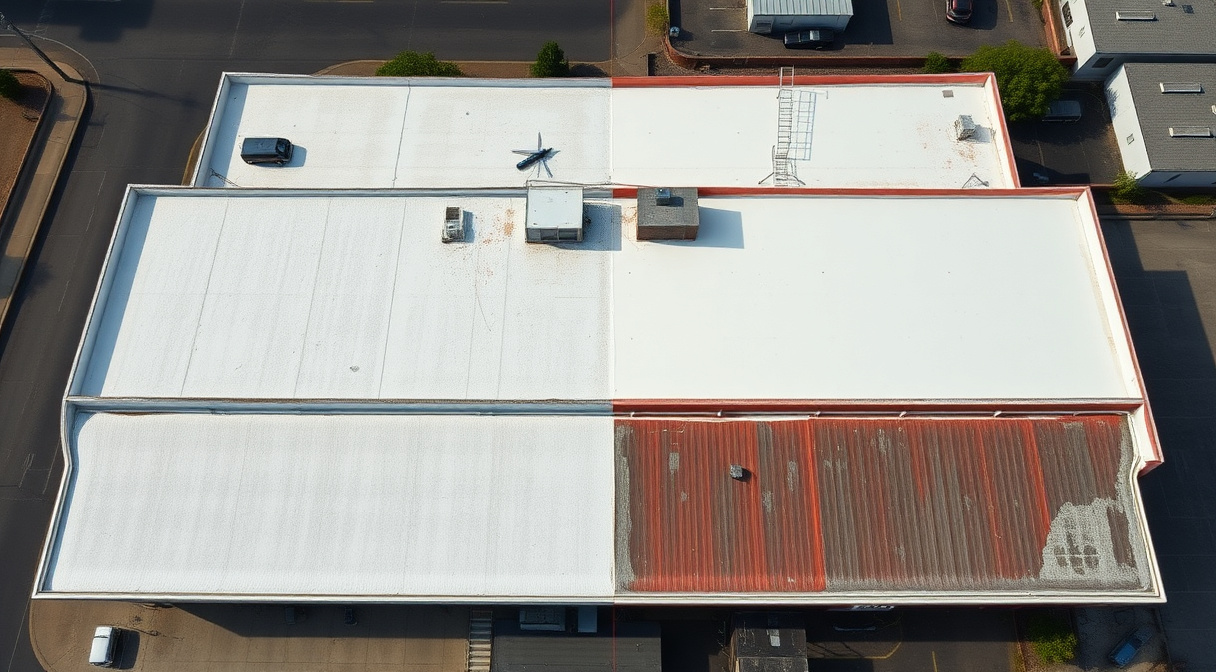
Metal roofs are long-lasting but have countless fasteners and seams that loosen and leak over time, and they conduct heat and cold. In fact, one of the most common uses of SPF is to recover an aging, leaking metal roof — sealing all those fasteners and seams under a seamless insulated layer and turning a problem roof into a high-performing one.
R-value and energy savings
One of SPF's biggest advantages is that it insulates and waterproofs in the same step. Closed-cell spray foam delivers about R-6.5 per inch — among the highest R-values in roofing — and because it's sprayed as a continuous layer, there are no gaps, seams, or fasteners creating thermal bridges. You choose the thickness, so you can build in as much R-value as your energy goals justify.
On top of the insulation, the reflective coating turns the roof into a 'cool roof.' A bright white surface reflects a large share of the sun's energy instead of absorbing it, dramatically lowering rooftop temperatures and cutting cooling loads. Together, the high R-value and the reflectivity can meaningfully reduce both heating and cooling costs — especially on a large flat roof in a hot climate that previously had little roof insulation. Those savings recur every month the roof is in service, which is why an SPF roof is one of the few that actually pays part of its cost back.
Restoration vs. replacement: when to recover instead of tear off
This is the decision that saves building owners the most money. Before you accept a replacement quote, find out whether your roof can be restored. The key question is whether your existing roof is structurally sound and can be made dry.
- Sound, dry deck → restoration (recover) is usually the smarter, more economical path.
- Isolated wet insulation → cut it out, repair, then restore.
- Saturated throughout or structurally failing → replacement may genuinely be needed.
When restoration is viable, the advantages are substantial: it commonly costs a fraction of a full tear-off, it avoids sending tons of old roofing to the landfill, it keeps your building sealed with minimal downtime, and — because it adds foam and a coating — it often produces a better-performing roof than the one you started with. And the restored roof is itself renewable, so future recoats extend its life without another major expense.
The renewable advantage: why SPF's lifetime cost is low
Most commercial roofs are on a replacement clock — install, age out, tear off, repeat. SPF breaks that cycle. The foam itself doesn't wear out; only the coating slowly weathers under UV. When it thins (typically after 10 to 20 years), the roof is cleaned and recoated, restoring the surface and renewing the warranty without removing the foam. A maintained SPF roof can be renewed again and again for decades.
When you calculate cost per year over the true life of the roof — including avoided tear-offs and the energy savings along the way — SPF is frequently the lowest-cost commercial roof available. The sticker price per square foot only tells part of the story; the renewable lifecycle is where the real savings live.
What drives your SPF roof price up or down
Understanding the levers helps you budget and compare quotes fairly:
- Foam thickness / R-value — more inches of foam for higher R-value means more material.
- Coating type and mil thickness — longer warranties require thicker coating; silicone and acrylic differ in cost.
- Existing roof condition — how much prep, drying, and repair is needed before spraying.
- Roof complexity — penetrations, curbs, and detail work add labor.
- Slope correction — building up foam to fix ponding adds material.
- Access and logistics — building height, staging, and site conditions.
The mistakes that cost building owners the most
A few avoidable errors show up again and again:
- Accepting a tear-off quote without exploring restoration — often the single most expensive mistake.
- Choosing a contractor who under-applies coating to win on price — it shortens the roof's life and can void the warranty.
- Skipping the moisture survey — spraying foam over trapped wet insulation seals the problem in.
- Neglecting the recoat — letting the coating wear through exposes the foam to UV and turns a simple recoat into a costly repair.
- Comparing only sticker price, not lifetime cost — the renewable roof usually wins over its life even if it isn't the cheapest today.
How long does a spray foam roof last?
With proper installation and maintenance, an SPF roof lasts 30 years or more — and effectively indefinitely, because it's renewable. The key is timely recoating: catch the coating before it wears through, renew it, and the roof simply keeps going. That's why a maintenance program isn't an optional add-on but the mechanism that unlocks SPF's full value. Inspect at least annually and after major storms, repair small issues early, and recoat on schedule, and you own a roof that outlasts several cycles of any conventional system.
Understanding SPF roof warranties
One of the most misunderstood parts of a commercial roof is the warranty, and SPF's is genuinely different from most systems. Foam roof warranties are typically tied to the coating and its thickness — a thicker coating buys a longer warranty term (commonly 10, 15, or 20 years). The crucial feature is that the warranty is renewable: when you recoat the roof at the end of the term, the warranty renews for another period without a tear-off. That's how an SPF roof can stay under warranty for 30, 40, or more years on the same foam.
When you compare warranties, look past the headline number to what's actually covered, what maintenance is required to keep it valid, and whether it's a manufacturer's material warranty, a contractor's workmanship warranty, or a full system warranty covering both. We explain exactly what your warranty covers and set up the maintenance that keeps it in force — because a warranty you accidentally void through neglect isn't worth much.
Common myths about spray foam roofing
A few persistent misconceptions keep some building owners from even considering SPF. Let's clear them up:
- "Foam roofs don't last." A neglected foam roof whose coating wore through will fail — but a maintained, recoated SPF roof is one of the longest-lived systems available. The lifespan depends on maintenance, not the foam.
- "Foam is fragile / you can't walk on it." A properly installed SPF roof with a granulated coating is walkable and stands up to normal foot traffic and hail; the rigid closed-cell foam adds compressive strength.
- "Foam roofs are only for the desert." SPF performs nationwide, in wet and cold climates too — the coating is simply matched to the climate (silicone for wet/ponding, for example).
- "It's more expensive." Up front, SPF is competitive with quality systems; over its renewable lifecycle, it's frequently the lowest-cost option because it avoids repeated tear-offs.
Getting it right — and getting it for less
The best commercial roof isn't the cheapest one today or the most expensive tear-off — it's the right system, correctly applied, with the lowest lifetime cost. For most flat and low-slope commercial roofs, that's a seamless SPF system installed over a properly assessed roof (or a restoration that recovers the roof you already own), protected by the right coating, and maintained on a schedule that keeps it renewable for decades.
That's exactly what we do. PolyurethaneFoamRoofing.com is a national spray foam roofing contractor focused entirely on SPF roof systems, coatings, restoration, and maintenance — with transparent pricing and honest assessments. Tell us about your building and we'll put together a clear scope and quote, and tell you plainly whether to restore or replace. Call 844-967-5247 to get started.
Frequently asked questions
Most commercial SPF roof systems run roughly $4.50 to $9.00 per square foot installed, depending on foam thickness (R-value), the coating and warranty, the existing roof's condition, and roof complexity. Restoration/recover is often $3.50–$7.00, and a recoat runs about $1.50–$3.50. A full tear-off and replacement, by comparison, commonly runs $7–$15+ per square foot.
SPF offers advantages single-ply membranes can't match: it's fully seamless and self-flashing (no seams to leak), adds high R-value, can be built up to fix ponding, installs over the existing roof, and is renewable rather than replaced. TPO and EPDM are cheaper up front but seamed, low-insulation, and on a replacement cycle. For many flat roofs, SPF wins on lifetime cost.
A properly installed and maintained SPF roof lasts 30 years or more — effectively indefinitely, since it's renewable. When the coating wears (every 10–20 years), a recoat restores the roof and renews the warranty without removing the foam.
Ready for a free roof assessment?
Tell us about your building and we'll build a clear scope and transparent quote.